
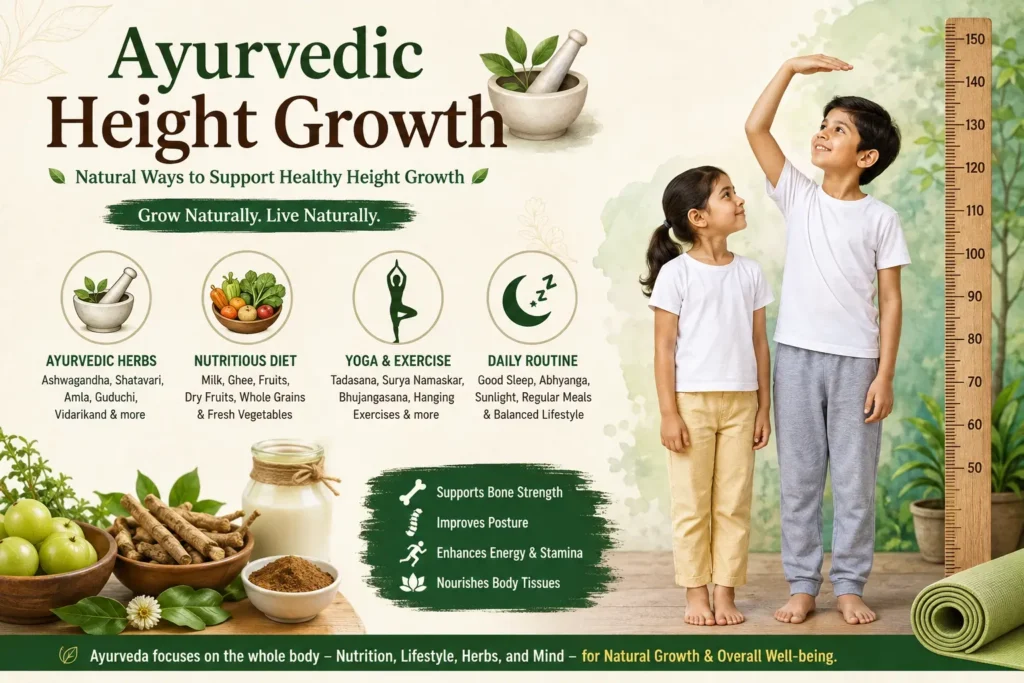
Ayurvedic Height Growth: Natural Ways to Support Healthy Height Growth
Height plays a big role in how confident many people feel — whether it’s about personal appearance, sports performance, or simply standing out in a crowd. While genetics largely decide how tall a person grows, Ayurveda, India’s 5,000-year-old system of natural healing, offers time-tested practices that may help the body reach its full natural growth potential during the growing years. In this guide, we’ll explore ayurvedic height growth methods, including herbs, diet, yoga, and daily routines rooted in ancient wisdom.
Note: Height is primarily determined by genetics, nutrition, and hormones, especially during childhood and adolescence. Ayurvedic practices work best as supportive measures alongside a balanced lifestyle — not as a guaranteed way to add inches after growth plates close. Always consult a qualified Ayurvedic practitioner or doctor before starting any herbal regimen, especially for children.
Table of Contents
- What Does Ayurveda Say About Height Growth?
- Ayurvedic Herbs for Height Growth
- Height Growth Powder: What It Is and How It’s Used
- Ayurvedic Diet Tips for Natural Height Growth
- Yoga and Exercises Recommended in Ayurveda
- Daily Lifestyle Habits (Dinacharya) for Healthy Growth
- Best Age to Start Ayurvedic Height Growth Practices
- Frequently Asked Questions
- Final Thoughts
1. What Does Ayurveda Say About Height Growth?
In Ayurveda, growth and development are linked to Asthi Dhatu (bone tissue) and Majja Dhatu (bone marrow and nervous tissue). A well-nourished body with balanced Vata, Pitta, and Kapha doshas is believed to support optimal bone strength and development. Ayurveda emphasizes that proper digestion (Agni), quality sleep, and nutrient absorption are foundational to healthy growth — not just diet alone.
This is why an ayurvedic approach to height growth focuses on the whole body system — digestion, nutrition, hormone balance, and physical activity — rather than a single herb or supplement.
2. Ayurvedic Herbs for Height Growth
Several Ayurvedic herbs for height are traditionally used to support bone health, nutrient absorption, and overall growth during developmental years:
- Ashwagandha – Known as an adaptogen, traditionally used to support strength, stamina, and hormonal balance.
- Shatavari – Often used to support overall vitality and nutrient assimilation.
- Guduchi (Giloy) – Believed to strengthen immunity and support tissue nourishment.
- Amla (Indian Gooseberry) – Rich in Vitamin C, traditionally used to support bone and connective tissue health.
- Vidarikand – Used in traditional formulations aimed at supporting growth and vitality in growing children.
These herbs are typically taken as part of formulated blends rather than in isolation, and should only be used under the guidance of a certified Ayurvedic doctor, particularly for children and teenagers.
3. Height Growth Powder: What It Is and How It’s Used
A height growth powder is a blended Ayurvedic formulation, usually combining herbs like Ashwagandha, Shatavari, Amla, and other bone-nourishing ingredients, often mixed with milk or water. These powders are marketed to support:
- Bone density and strength
- Nutrient absorption during growth years
- Energy and stamina for physical activity
While many families use these powders as part of a daily wellness routine, it’s important to check ingredient transparency, buy from certified Ayurvedic brands, and avoid products making exaggerated “guaranteed height” claims. No powder can override genetics or add height once growth plates have naturally closed (typically by the late teens for most individuals).
4. Ayurvedic Diet Tips for Natural Height Growth
Ayurveda places heavy emphasis on Ahara (diet) for supporting natural height growth. Some traditional dietary recommendations include:
- Milk and ghee – Considered nourishing for Asthi Dhatu (bone tissue).
- Seasonal fruits and vegetables – To ensure a steady supply of vitamins and minerals.
- Whole grains and pulses – For sustained energy and protein.
- Dry fruits (almonds, dates) – Traditionally soaked overnight and consumed for added nutrition.
- Warm, freshly cooked meals – Ayurveda discourages cold, processed, or stale food, believing it dampens digestive fire (Agni).
Avoiding excess sugar, fried foods, and carbonated drinks is also commonly advised, as these are believed to disturb digestion and dosha balance, indirectly affecting nutrient absorption needed for growth.
5. Yoga and Exercises Recommended in Ayurveda
Physical activity is considered essential for stimulating growth hormone and improving posture, which can make a real difference in how tall a person appears and how well the spine develops. Ayurveda-aligned yoga practices often include:
- Tadasana (Mountain Pose) – Encourages spinal elongation and posture correction.
- Surya Namaskar (Sun Salutations) – A full-body sequence believed to stimulate circulation and glandular function.
- Bhujangasana (Cobra Pose) – Stretches the spine and chest.
- Vrikshasana (Tree Pose) – Improves balance and posture.
- Hanging exercises – Traditionally recommended to decompress the spine.
Consistency matters more than intensity — practicing these for 20–30 minutes daily is generally suggested over sporadic, intense sessions.
6. Daily Lifestyle Habits (Dinacharya) for Healthy Growth
Ayurveda’s concept of Dinacharya (daily routine) plays a supporting role in healthy growth:
- Sleep by 10 PM – Growth hormone is released mainly during deep sleep, especially at night.
- Oil massage (Abhyanga) – Traditionally used to nourish tissues and improve circulation.
- Regular meal timings – Supports consistent digestion and nutrient absorption.
- Limiting screen time before bed – Believed to support better sleep quality and hormonal balance.
- Sun exposure – Encouraged in moderation for natural Vitamin D synthesis, important for bone health.
7. Best Age to Start Ayurvedic Height Growth Practices
Ayurvedic practitioners generally suggest that these practices are most effective during the growth window — typically from childhood through late adolescence (up to approximately 18–21 years, depending on individual growth plate closure). Starting good nutrition, yoga, and sleep habits early gives the body the best natural environment to reach its genetically determined height potential.
For adults past this growth window, Ayurvedic practices can still support posture, bone health, and overall vitality, even though they won’t add height once growth plates have closed.
8. Frequently Asked Questions
Q1: Can Ayurveda really increase height after 18? Once growth plates close (usually in the late teens), no method — Ayurvedic or otherwise — can add height. However, posture correction and spinal health practices can improve how tall a person appears to stand.
Q2: Are Ayurvedic height growth powders safe for children? Many are formulated from natural herbs, but safety depends on the brand, ingredient quality, and dosage. Always consult a certified Ayurvedic doctor before giving any supplement to a child.
Q3: How long does it take to see results from Ayurvedic practices? Since these methods work gradually by supporting overall nutrition and bone health, visible changes (if any) are typically noticed over several months of consistent practice, not days or weeks.
Q4: What is the most important factor in natural height growth? Genetics sets the primary range, but nutrition, sleep, physical activity, and hormonal health determine how close a person gets to their genetic height potential.
9. Conclusion
Ayurvedic height growth practices offer a holistic, time-tested approach that focuses on nourishing the body from the inside out — through diet, herbs, yoga, and daily routines. While no natural method can override genetics, following these practices consistently during the growing years can help support healthy growth, strong bones, and better posture overall.
If you’re considering Ayurvedic herbs for height or a height growth powder for yourself or your child, consult a certified Ayurvedic practitioner to ensure the approach is safe, suitable, and tailored to individual health needs.